
Greetings

Olivia Schubert
FUEN President
FUEN President
Anyone travelling through the Nordic landscape quickly recognizes a distinctive scene: countless islands scattered across the sea, standing alone yet connected by the water that surrounds them. Together, they form a landscape of extraordinary beauty and strength. This image perfectly mirrors Europe’s national minorities. Each community has its own distinct language, history, and identity, yet we are united through shared values, solidarity, and the desire to preserve our diversity.
Dear guests, dear members, dear delegates,
As President of the Federal Union of European Nationalities, I am delighted to welcome you to our 2026 Congress in Helsingfors • Helsinki. My special thanks go to our hosts, the Swedish minority in Finland. Their community is a shining example of how minority protection can work successfully. Here, linguistic rights, education in one’s own language, and political participation are not abstract principles, but a lived reality. This model is a profound inspiration for us all.
Our strength lies above all in cooperation. When one minority makes progress, the hopes of others grow too. When rights come under pressure, a local challenge becomes a European task. The Minority SafePack Initiative has demonstrated this impressively. It mobilised more than a million people and firmly placed the issue of minority protection on the European agenda. Even though the political process did not lead to the hoped-for results, the objectives of this initiative remain our guiding principles.
The protection of our languages, cultures and identities, as well as greater European responsibility for minority rights, remain central concerns of our work. Our annual congress is where this community becomes truly visible. Let us use the days in Helsingfors • Helsinki to exchange experiences, develop new ideas, and work together to ensure that Europe’s diversity remains a vibrant and undeniable part of the future.
Dear guests, dear members, dear delegates,
As President of the Federal Union of European Nationalities, I am delighted to welcome you to our 2026 Congress in Helsingfors • Helsinki. My special thanks go to our hosts, the Swedish minority in Finland. Their community is a shining example of how minority protection can work successfully. Here, linguistic rights, education in one’s own language, and political participation are not abstract principles, but a lived reality. This model is a profound inspiration for us all.
Our strength lies above all in cooperation. When one minority makes progress, the hopes of others grow too. When rights come under pressure, a local challenge becomes a European task. The Minority SafePack Initiative has demonstrated this impressively. It mobilised more than a million people and firmly placed the issue of minority protection on the European agenda. Even though the political process did not lead to the hoped-for results, the objectives of this initiative remain our guiding principles.
The protection of our languages, cultures and identities, as well as greater European responsibility for minority rights, remain central concerns of our work. Our annual congress is where this community becomes truly visible. Let us use the days in Helsingfors • Helsinki to exchange experiences, develop new ideas, and work together to ensure that Europe’s diversity remains a vibrant and undeniable part of the future.

Henrik Wickström
Member of the Parliament of Finland | Chair of Folktinget
Member of the Parliament of Finland | Chair of Folktinget
Dear Congress Participants,
It is my great pleasure to warmly welcome you to the 70th Congress of FUEN – and especially to Helsinki, where the congress is being held for the first time. It is a great honor for the Swedish Assembly of Finland (Folktinget) and for Finland to host this milestone congress.
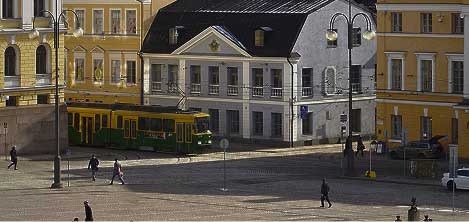
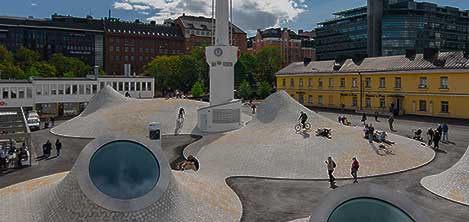
We gather here in beautiful Helsinki, a vibrant and dynamic bilingual capital where Finnish and Swedish live side by side in everyday life. The city lies by the sea, and the close connection to the archipelago and the Baltic Sea reminds us how openness and connections across borders have shaped our societies throughout history. In the same spirit, this congress brings together people and organizations working to promote the rights of minorities across Europe.
The promotion of linguistic rights and minority languages is more important than ever. Across Europe and around the world, we see rapid societal changes driven by globalization, digitalization, migration, and political uncertainty. While these developments create new opportunities for cooperation and exchange, they can also place increased pressure on smaller languages and the communities that speak them. Without active support and strong legal protections, minority languages risk losing space in education, public life, and the digital sphere.
Promoting linguistic rights is therefore not only about protecting languages, but also about safeguarding democratic participation, cultural diversity, and social inclusion. When people can use their own language in education, public services, and civic life, they are better able to participate fully in society. In this sense, linguistic rights are an essential part of human rights and of strong, resilient democracies.
A crucial condition for minority languages to thrive and develop is access to education in one’s own language – from early childhood education to higher education. Education plays a key role in transmitting language, culture, and identity to future generations. When children and young people are able to learn and grow in their own language, it strengthens both individuals and society as a whole.
I hope that your days in Helsinki will offer inspiring discussions, new partnerships, and renewed commitment to advancing Europe’s linguistic diversity.
Welcome to Helsinki, and I wish you a fruitful and memorable congress.
Dear Congress Participants,
It is my great pleasure to warmly welcome you to the 70th Congress of FUEN – and especially to Helsinki, where the congress is being held for the first time. It is a great honor for the Swedish Assembly of Finland (Folktinget) and for Finland to host this milestone congress.
We gather here in beautiful Helsinki, a vibrant and dynamic bilingual capital where Finnish and Swedish live side by side in everyday life. The city lies by the sea, and the close connection to the archipelago and the Baltic Sea reminds us how openness and connections across borders have shaped our societies throughout history. In the same spirit, this congress brings together people and organizations working to promote the rights of minorities across Europe.
The promotion of linguistic rights and minority languages is more important than ever. Across Europe and around the world, we see rapid societal changes driven by globalization, digitalization, migration, and political uncertainty. While these developments create new opportunities for cooperation and exchange, they can also place increased pressure on smaller languages and the communities that speak them. Without active support and strong legal protections, minority languages risk losing space in education, public life, and the digital sphere.
Promoting linguistic rights is therefore not only about protecting languages, but also about safeguarding democratic participation, cultural diversity, and social inclusion. When people can use their own language in education, public services, and civic life, they are better able to participate fully in society. In this sense, linguistic rights are an essential part of human rights and of strong, resilient democracies.
A crucial condition for minority languages to thrive and develop is access to education in one’s own language – from early childhood education to higher education. Education plays a key role in transmitting language, culture, and identity to future generations. When children and young people are able to learn and grow in their own language, it strengthens both individuals and society as a whole.
I hope that your days in Helsinki will offer inspiring discussions, new partnerships, and renewed commitment to advancing Europe’s linguistic diversity.
Welcome to Helsinki, and I wish you a fruitful and memorable congress.


 Jaakko Kemppainen:
Helsinki Cathedral